Copyright © 2010-2024
Nagios Enterprises, LLC. All rights reserved.
Getting Started
Installation
- System Requirements
- Ports and Protocols
- Installation Options
- Using The VMware Virtual Machine
- Manual Installation
- Installing Nagios XI with VMware Workstation Player
- Installing Nagios XI with VMware ESX vSphere
- Installing Nagios XI with Hyper-V
- Offline Installation
System Configuration
- Initial Setup
- General Program Options
- Changing The XI System Time
- Email Settings
- Setting Up Microsoft SMTP with OAuth 2.0
- Setting up Gmail SMTP With OAuth 2.0
- Understanding Email Sending
- Inbound Commands
- SMS Alerting
- MultiTech MTR API Integration
- Using DUO 2FA
- Twilio SMS Integration
- Configuring Core Contacts To Use XI's phpmailer SMTP Settings
- XI Notification Escalations
- XI Details Overview
- XI Dashboards
- XI Views
- Customizing the XI Landing Page
- Security Credentials
- License Settings
- Nagios XI - Best Practices
Updates
User Management
Visualizations
- How To Generate SLA Reports
- Generating Reports With Nagios XI
- Generating Graphs With Nagios XI
- Using the Nagios XI World Map
Monitoring Configuration
- Using Auto-Discovery In Nagios XI
- Monitoring Websites
- Monitoring Website Defacement
- Monitoring Wizards
- Core Configuration Manager
- XI Notification Variables
- Changing Host Alive Check
- Monitoring VMware
- Monitoring OSX
- Monitoring AIX With Nagios
- Monitoring Hosts Using NRPE and NRPE Monitoring Wizard
- Monitoring Linux Using NCPA and Linux Server Monitoring Wizard
- Monitoring Linux Using NRPE and Legacy Linux Server Monitoring Wizard
- Monitoring Hosts Using SSH
- Monitoring Oracle Databases
- Maintaining Manual Object Configuration Files in Nagios XI
- Monitoring Linux Using SNMP
- Using The SNMP Walk Wizard
- Using NRDP With Nagios XI
- Log Monitoring with Swatch
- Monitoring WatchGuard
- Bulk Host Import Wizard Usage
- Adding Service to Switch or Router
- Using the Negate Plugin
- Configuring Email Notifications
- Integrating Slack With Nagios XI
- Configuring Downtime In Nagios XI
- Monitoring A Websensor EM08
- Passive Monitoring With NRDS
- How To Monitor Apache Tomcat With Nagios XI
- How To Monitor JBoss/WildFly With Nagios XI
- How To Monitor GlassFish With Nagios XI
- How To Monitor WebLogic With Nagios XI
- How To Monitor JMX With Nagios XI
- How To Monitor Jetty JMX With Nagios XI
- Monitoring a MongoDB Server
- Monitoring a MongoDB Database
- Monitoring a Cassandra Database
- Understanding User Macros
- Understanding The User Macros Component
- How To Monitor Apache ActiveMQ
- How To Use Deadpool In Nagios XI
- Excluding Hosts And Hostgroups In Nagios XI
- Understanding And Using XI Tools
- How To Monitor Docker Containers
- Using The CCM For Service Management
Agents
Monitoring Windows
- NSClient++
- WMI Client
- Monitoring Windows Event Logs
- Adding Windows Disk Usage Checks In XI
- Installing MSSQL Wizard Prereqs
- Monitoring Microsoft SQL
- Checking For Windows Updates
- Passive Monitoring with NRDS_Win
Extending Nagios
System Management
- Directory Structure
- Log Locations and Descriptions
- Resizing the VM disk size
- Converting the VMware Image to VirtualBox
- Importing Nagios XI into Microsoft Hyper-V
- Backing Up And Restoring
- Boosting Performance
- Repairing Database
- Database Optimization
- Managing Remote Nagios XI Servers
- How to Change Default Passwords
Advanced Topics
- High Availability
- Monitoring A Nagios XI Server
- Integrating MNTOS With Nagios
- Integrating Mod Gearman
- Migrating From Nagios Core
- SNMP Trap Integration
- Distributed Monitoring
- Passive Checks
- Exporting the XI Configuration Database
- Installing Cacti Alongside XI
- Amazon EC2 Cloud
- Automated Host Management
- Restarting a Linux/Windows Service from Nagios XI
- Authenticating with Active Directory
- Monitoring Active Directory with LDAP
- Configuring SSL with Nagios XI
- Using SSL with XI Active Directory
- How To Use Capacity Planning
- Integrating Mod_Security With XI
- Introduction to Event Handlers
- Redundancy And Security Planning
Developer Tools
- Global Event Handlers
- Accessing The Backend API
- Writing Custom Wizards
- Component Development
- Integrating autoIT with Nagios
- Checking Program Loadtime With autoIT
- Actions Component
- Contributing To Nagios Translations
Video Tutorials
System Configuration
Initial Setup
Upon the initial login to Nagios XI, you will be asked to configure a few basic system settings, such as the administrator password and the internal URL of the web interface. The following tutorial video will demonstrate the initial setup steps for Nagios XI.
Nagios XI Web Interface Setup Guide
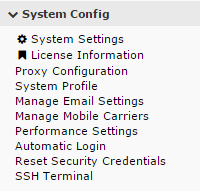
Once the initial system configuration is complete, any of these options can be re-configured
by accessing the Admin panel, under the System Configuration menu,
which is located on the left side of the interface.
General Program Options
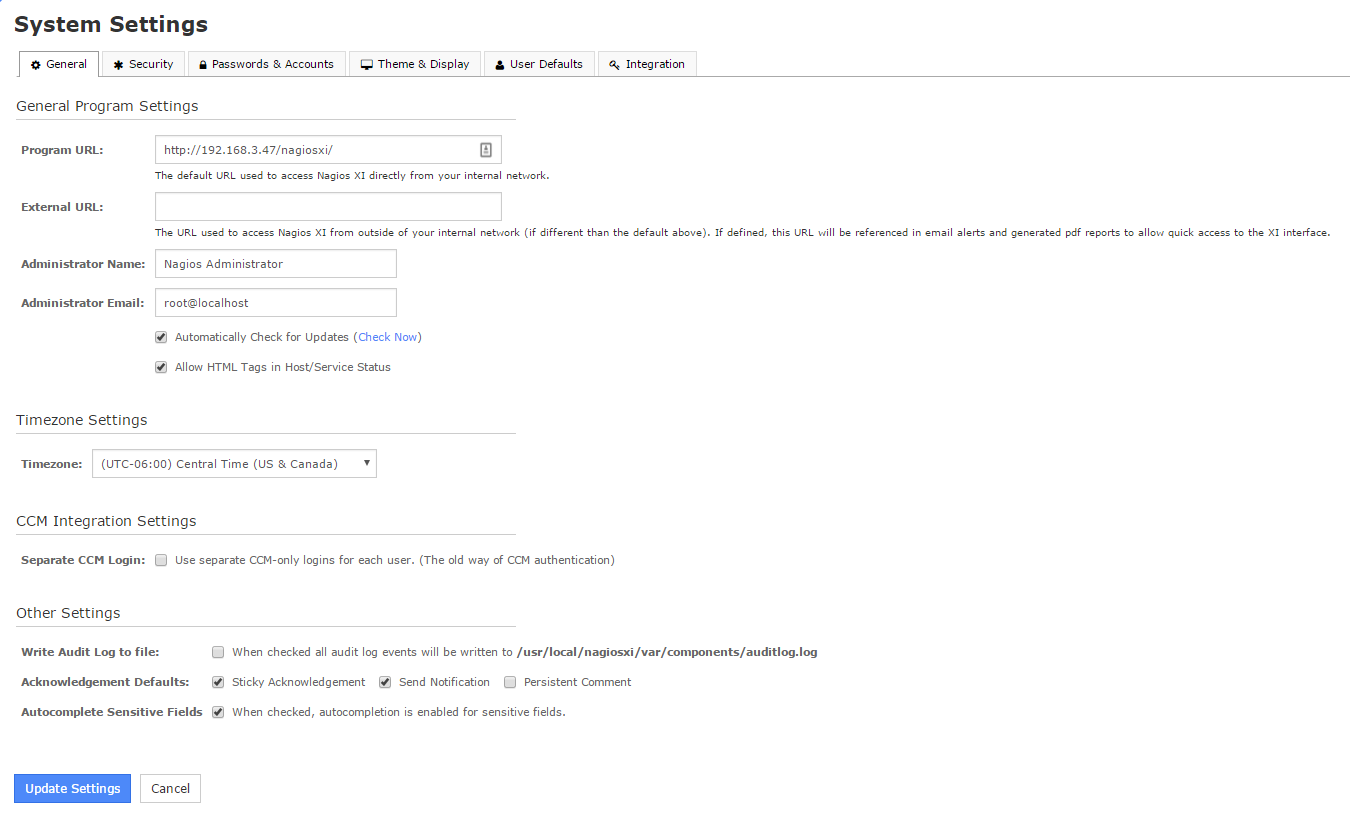
To configure general settings for the Nagios XI interface, login as the administrator and select the
Admin link on the top menu bar. This will bring up the Admin dashboard, along with
all of the administrative links on the left menu. To access any of the general program options, select
the appropriate link under the System Configuration menu on the left side of the page.
Changing The XI System Time
This document describes how to change the system date, time, and timezone on the Nagios XI virtual machine, or a physical server running CentOS. It is intended for use by Nagios XI Administrators.
Email Settings
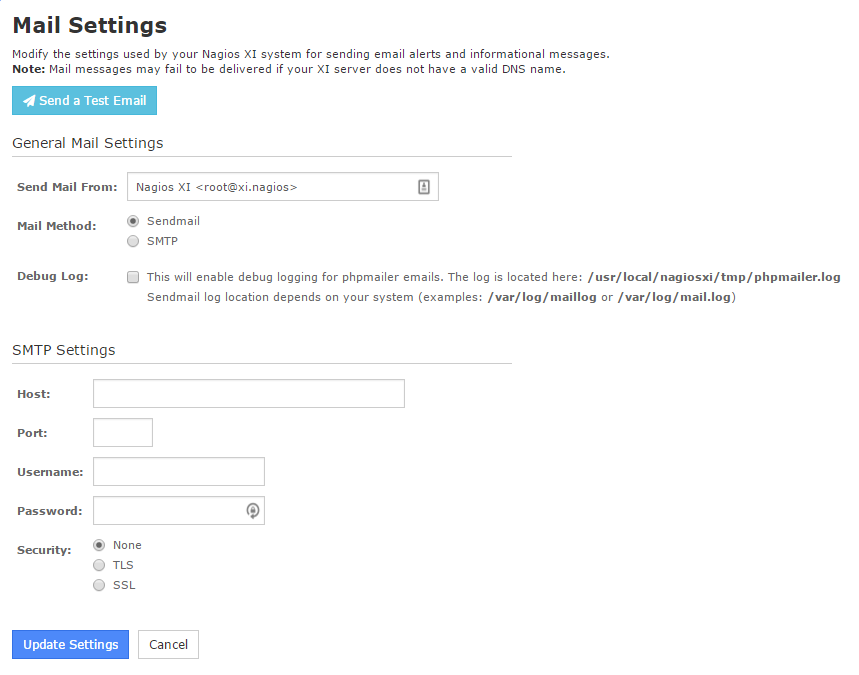
Modify the settings used by your Nagios XI system for sending email alerts and informational messages.
Note: Mail messages may fail to be delivered if your XI server does not have a valid DNS name.
Setting Up Microsoft SMTP with OAuth 2.0
Note: This feature requires XI 5.10 or later.
This document describes how to setup OAuth 2.0 authentication for SMTP with Microsoft services such as Microsoft 365.
This document is intended for use by Nagios Administrators who want to use a Microsoft account to send emails out of Nagios XI.
Setting up Gmail SMTP With OAuth 2.0
Note: This feature requires XI 5.10 or later.
This document describes how to setup OAuth 2.0 authentication for SMTP with Google services such as Gmail.
This document is intended for use by Nagios Administrators who want to use a Gmail account to send emails out of Nagios XI.
Understanding Email Sending
This document describes how Nagios XI sends emails and explains how to configure your email settings. Nagios XI uses email to send notifications as well as for sending reports.
This document is intended for use by Nagios Administrators who want to understand in detail how emails are sent by Nagios XI.
Inbound Email Commands
This document describes the inbound email commands that are accepted by Nagios XI when it receives an email response to a notification.
This document is intended for use by Nagios Users who want to respond to incidents by email.
Setting SMS Alerts in Nagios XI
This document describes how to setup SMS alerts and how to manage mobile carriers in Nagios XI. Notifications by SMS must be enabled per user in Nagios XI. Receiving SMS alerts allow users to get updates about their Nagios XI system via their mobile phone.
Nagios XI – MultiTech MTR API Integration
This document describes how to integrate the MTR API found on a MultiConnect® rCell Series Router from MultiTech with Nagios XI. It will work with Nagios XI version 5.5 and newer. Nagios XI uses this API to send text notifications to recipients.
This document is intended for use by Nagios Administrators experienced with installing and configuring network devices.
Nagios XI – Using DUO Two Factor Authentication
This document describes how to configure Nagios XI to use DUO for two factor authentication (2FA). Nagios XI already provides email 2FA however DUO can be used instead, this makes 2FA more accessible on more devices.
This document is intended for use by Nagios Administrators that need to configure DUO on Nagios XI.
Nagios XI – Twilio SMS Integration
This document describes how to integrate Twilio component with Nagios XI for notification. The Twilio SMS component provides outbound SMS notifications from Nagios XI, thereby increasing the flexibility, reliability and dependability of receiving critical alerts and notifications.
This document is intended for use by Nagios Administrators who wish to integrate Twilio with Nagios XI to receive SMS alerts without using an email setup.
Configuring Core Contacts to Use XI's phpmailer SMTP Settings
This document describes how to configure non-XI user (Core) contacts to use the SMTP phpmailer settings from the email management interface.
This document is intended for use by Nagios XI Administrators who wish to configure Core contacts to use the XI email configuration (including SMTP relay settings) without the (previously) required link to an XI user.
XI Notification Escalations
This document describes how to setup host and service escalations in Nagios XI. Escalations happen when a solution is not produced for a host or service in a specified response time. When this occurs, notifications are sent to another level of contacts so issues are not overlooked. Escalations provide a way to notify the appropriate people of issues and make sure that issues receive the proper visibility and are resolved.
XI Details Overview
This document explains how to utilize the different features of the Nagios® XI™ interface to view detail information about hosts and services. The Details menu offers many different ways to view the status of your hosts and services. In larger environments users may want to view status by host or service group, yet smaller environments may prefer to view status by device.
Understanding And Using XI Dashboards
Dashboards are a powerful feature of Nagios XI designed to provide individual users with customized information they find useful. Dashboards are often used to display important, relevant information where it is needed most. Dashboards are specific to individual Nagios XI users. Each user can create their own unique set of dashboards to customize Nagios XI to fit their needs. This document describes Nagios XI dashboards, what they can be used for, and how they can be managed.
Understanding And Using Nagios XI Views
Views are designed to provide individual users with quick access to Nagios XI pages and external websites they find useful. They are often used by network administrators who wish to display important information on wall monitors in network operations centers (NOCs) or public locations. This document describes Nagios XI views, what they are used for, and how they can be managed.
Customizing The XI Landing Page
This document describes how to customize the landing page that users see when they initially login to the Nagios® XI™ web interface. One of the benefits of Nagios XI is the flexibility to customize the information users see in the web interface. Customizing the landing (home) page within Nagios XI will allow users to get the most important information as soon as they log into Nagios XI.
Security Credentials
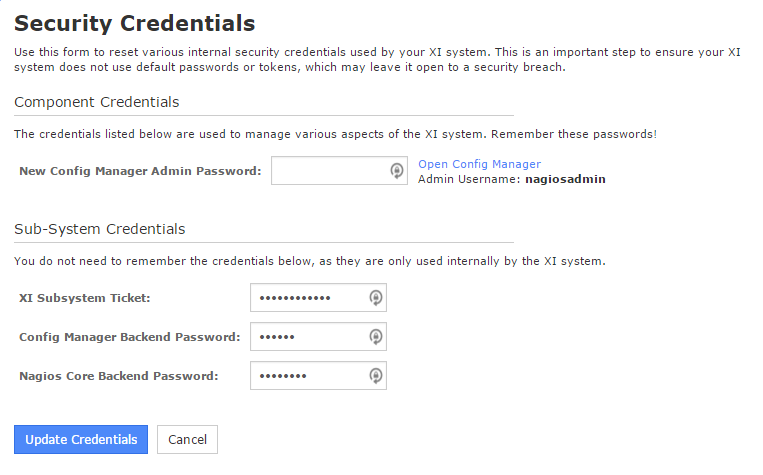
Use this form to reset various internal security credentials used by your XI system.
This is an important step to ensure your XI system does not use default passwords or tokens,
which may leave it open to a security breach.
The Component credentials are used to manage various aspects of the XI system. Remember these passwords!
The Sub-System Credentials are only used internally by the XI system. You do not need to remember them.
License Settings
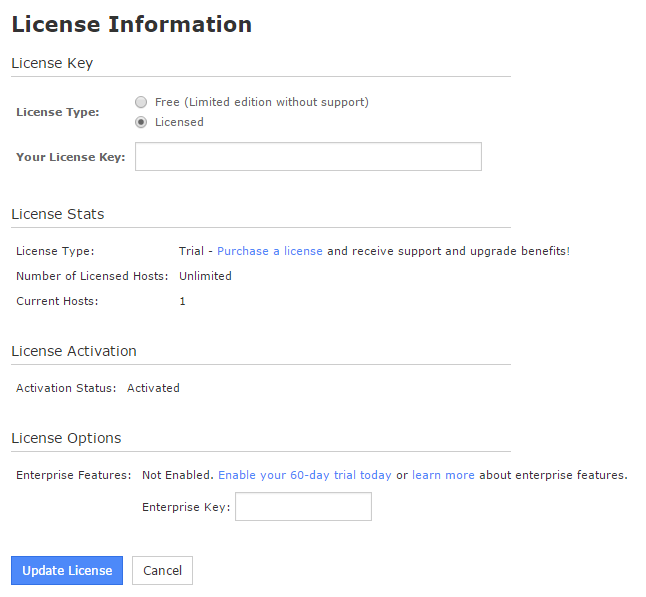
The License Information page allows you to update and view your current licensing information for Nagios XI.
Activating Your Nagios XI License
This document describes how to activate your Nagios XI license key. License activation is required for Nagios XI 2011.
Nagios XI - Best Practices
This document covers various “best practices” which can be applied to your Nagios XI server. It accompanies the presentation from the Nagios World Conference 2015 by Troy Lea.
This document is intended for use by Nagios XI Administrators as a guide to understand how to get the most out of Nagios XI. It covers a range of topics such as how to get the most out of XI, things you wish you knew, and configuration practices.